Quick takeaway
Before paying for a tour or package, look for information you can verify: a real business presence, clear contact channels, a written quotation, understandable payment terms and documented confirmation.
1. Look for a business presence you can verify
A travel seller does not need a large office to be legitimate, but you should be able to identify who you are dealing with. Check whether the agency publishes a business name, contact details and a location or other verifiable business information.
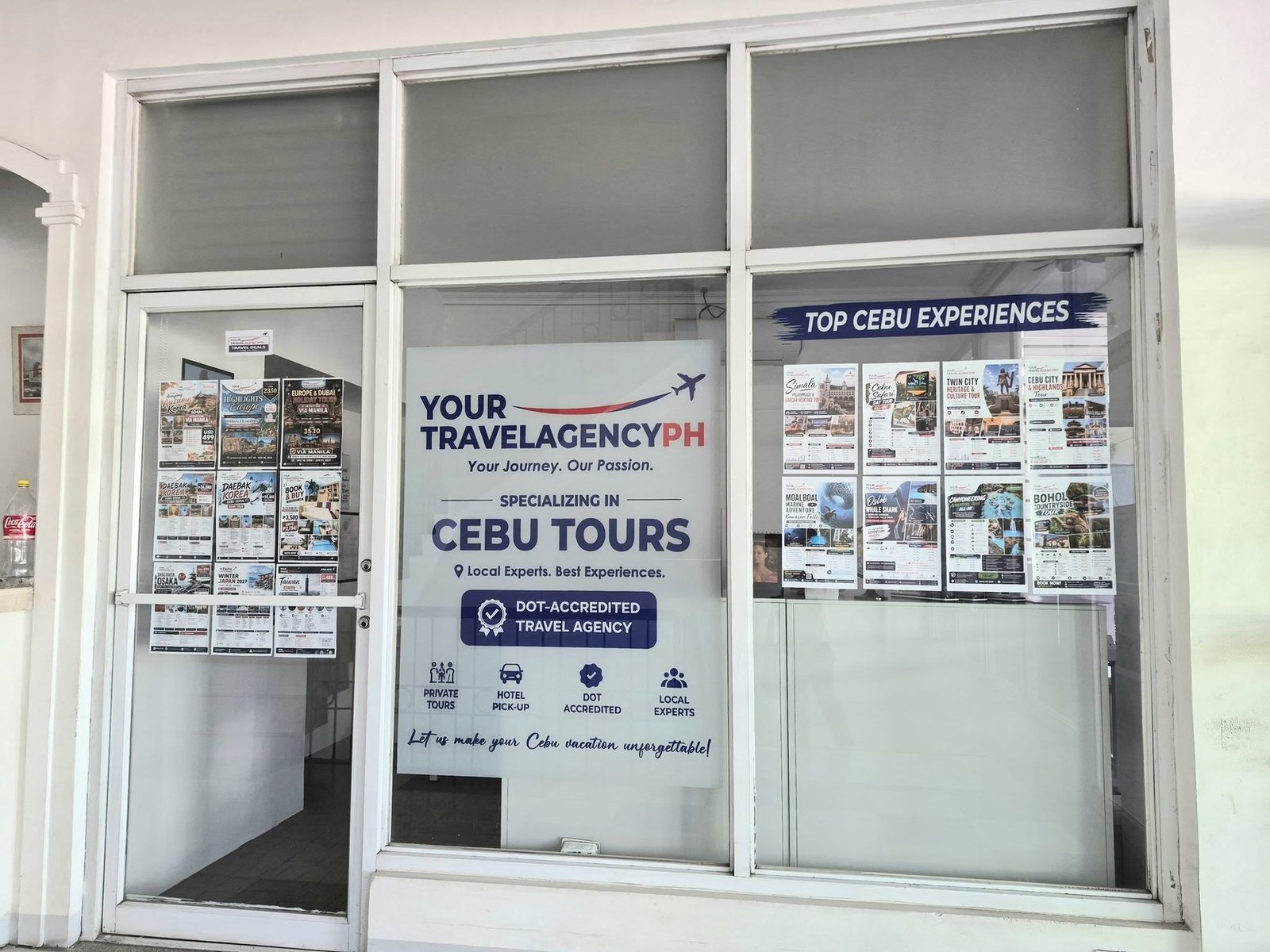
A physical office can be reassuring because it gives travelers another way to coordinate, but it should be treated as one credibility signal—not a substitute for reviewing the actual transaction.
2. Ask for a written quotation
Before sending money, request a quotation or booking summary that identifies the trip you are buying. It should be reasonably clear about the itinerary, inclusions, exclusions, price and payment terms.
If the package depends on availability, the quotation should also make that clear. A promotional post is useful for discovery; it should not be the only document you rely on for the booking.
3. Compare the package details, not only the price
Two Cebu tour advertisements can appear to offer the same route while having very different inclusions. One may include entrance fees, a guide and hotel pickup while another may cover transportation only.
- Transportation and vehicle type
- Entrance and activity fees
- Tour guide or coordinator
- Meals
- Hotel or airport transfers
- Insurance, when applicable
- Taxes, service charges or other fees
4. Use official payment channels
Confirm payment instructions through the agency’s published or verified contact channels. Be cautious when payment details suddenly change, when a stranger joins the conversation and provides a different account, or when you are pressured to send funds before the booking terms are clear.
Keep a transaction record
Save the quotation, payment proof, booking confirmation and important chat or email correspondence. These records help both the traveler and the agency resolve questions later.
5. Understand reservation and cancellation terms
Many travel products involve third-party suppliers such as airlines, hotels, attractions and transport operators. Their rules may affect whether a reservation is refundable, transferable or rebookable.
Ask what happens if you cancel, if a supplier changes the schedule, or if a joiners tour does not reach its required minimum. The answer does not have to be “fully refundable” to be acceptable; it needs to be clear before you commit.
6. Expect a documented confirmation
After the required payment is verified, you should receive written confirmation of the reservation or the next booking document applicable to your trip. Keep it with your travel records.
7. Be cautious with unusually cheap offers
A low price is not automatically suspicious. Promotions, shared transportation and supplier rates can create genuine bargains. The useful question is whether the price makes sense once you understand exactly what is and is not included.
What a credible booking process feels like
It should feel structured rather than mysterious. You know whom you are dealing with, what you are buying, how much you are paying, where the payment is going and what document comes next.
That is a better standard than relying on follower count, polished graphics or urgency alone.
Request a written quotation from a Cebu agency you can contact online or visit in person.
YTAPH provides written booking details through its published contact channels and operates a physical office in Mandaue City.
This guide is general travel-planning information. Attraction operations, supplier rules, rates, schedules and availability can change. Confirm the details applicable to your travel date before booking.